

我校岭南舞蹈研究成果在世界舞蹈联盟亚太分会会刊刊发
近日,世界舞蹈联盟(World Dance Alliance)亚太分会双月刊《亚太频道》(Asia-Pacific Channels)2026年6月号正式出版。我校作为该联盟亚太地区新会员单位,在本期会刊上发表了首份专题报告——《让岭南舞蹈被世界看见》(Let Lingnan Dance Be Seen by the World)。
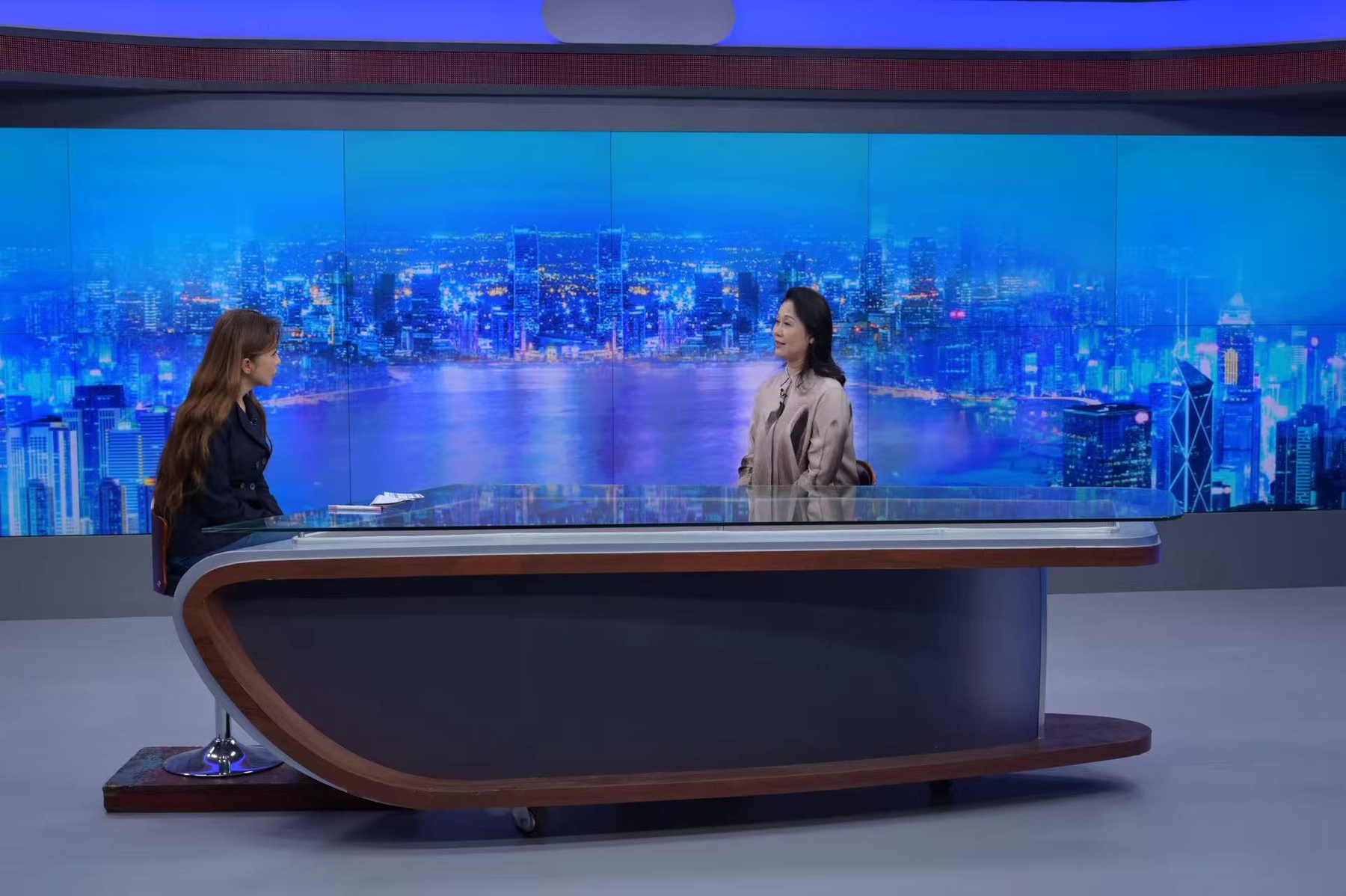
岭南舞蹈是中国地域舞蹈文化的重要组成部分,孕育于独特的地理环境与人文背景之中,兼具开放性与包容性,承载着岭南地区鲜明的风土人情与精神气质。2005年,著名舞蹈家陈翘首次提出“岭南舞蹈”这一概念,此后逐渐成为岭南地区高校教学、研究与创作的重要方向。其表现形态丰富多样,以道具舞为突出特征,包括醒狮舞、英歌舞、钱鼓舞及瑶族长鼓舞等,同时涵盖多种生活舞蹈与习俗舞蹈。
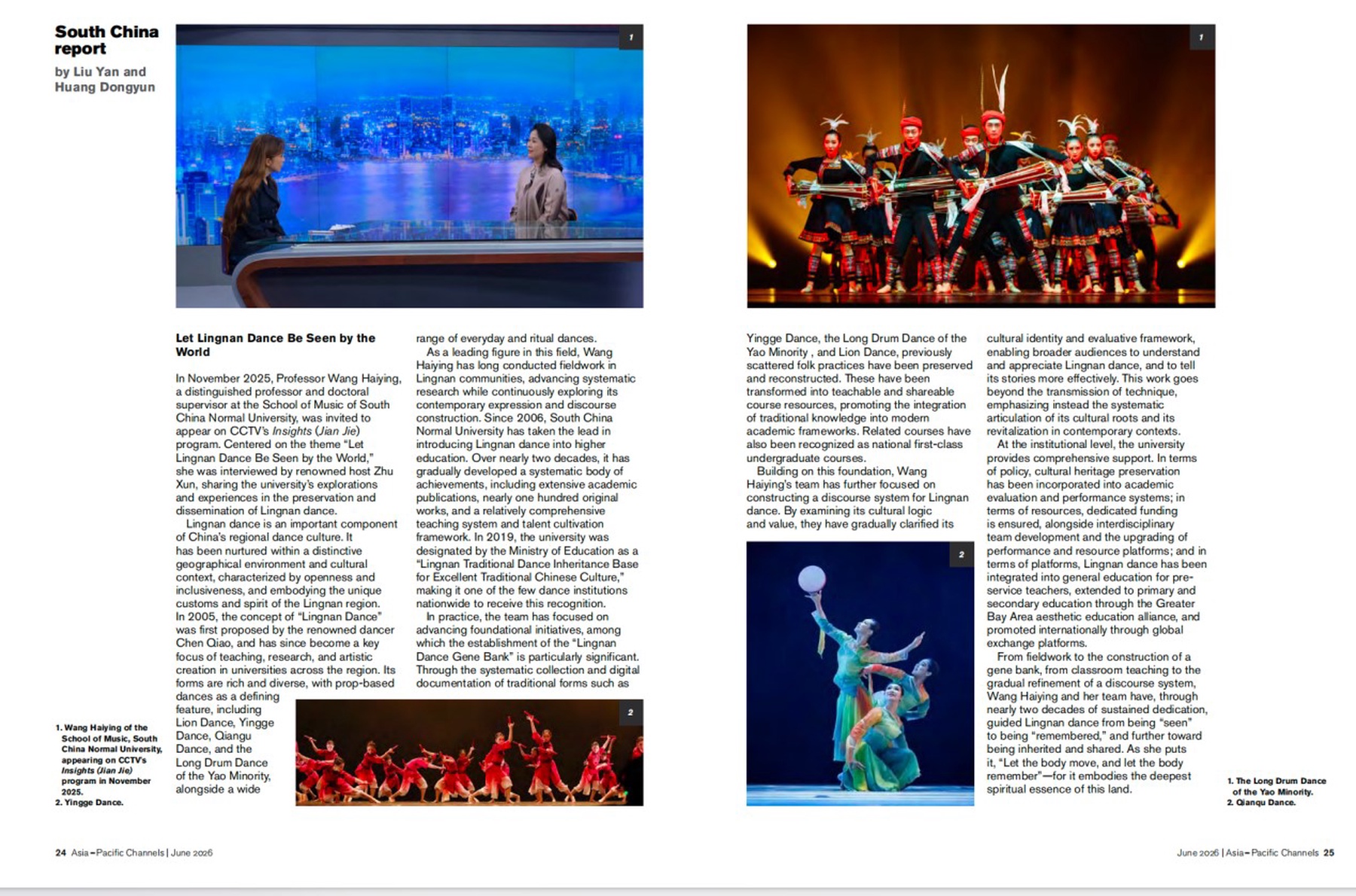
王海英受邀参加中央电视台CCTV《见解》栏目录制
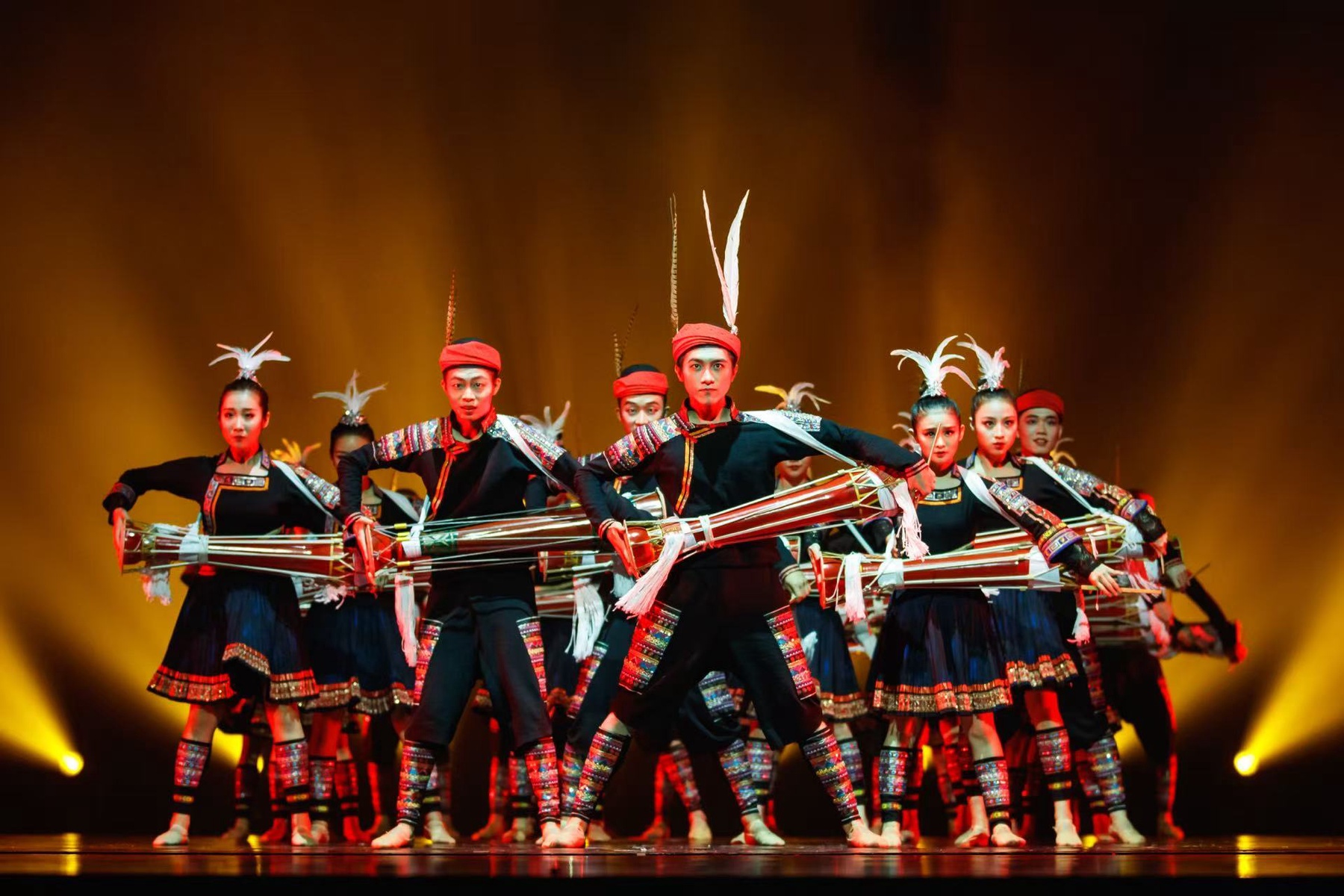
自2006年起,华南师范大学率先在高校中开展相关教学与研究工作。作为该领域的重要推动者,我校音乐学院二级教授、教育部中华优秀传统文化岭南传统舞蹈传承基地常务副主任王海英,带领团队长期深入岭南乡土开展田野调查,推动岭南舞蹈的系统研究,并不断探索其当代表达与话语建构。经过近二十年积淀,团队已形成百余万字学术成果,创作近百部原创作品,并构建起较为完整的教学与人才培养体系。2019年,学校获批教育部“中华优秀传统文化(岭南传统舞蹈)传承基地”,成为全国舞蹈类为数不多入选的高校之一。
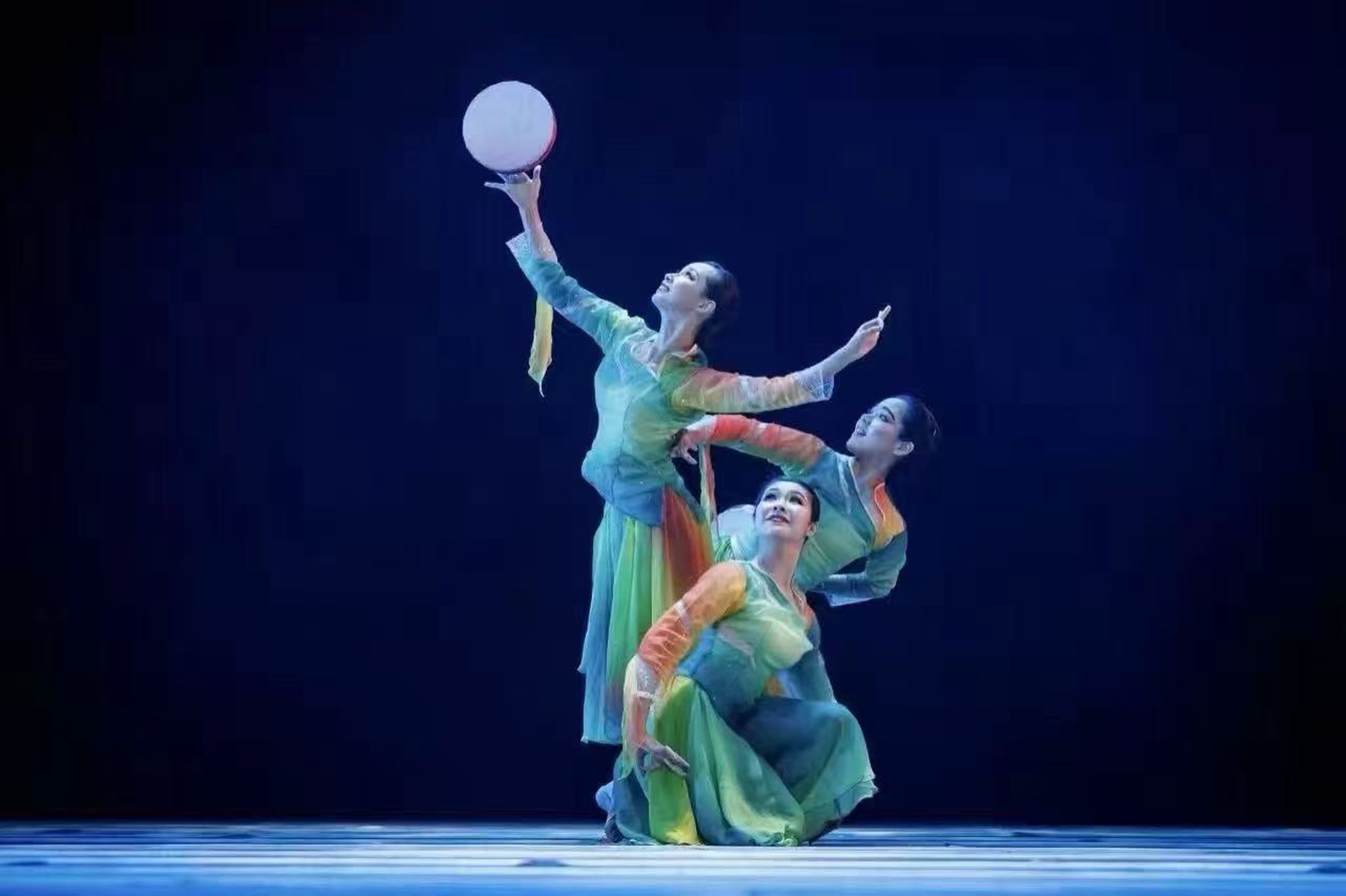
在具体实践中,团队着力推进“岭南舞蹈基因库”建设,通过系统采集与数字化整理英歌舞、瑶族长鼓舞、醒狮舞等民间舞蹈形态,留存与重构动作谱系与表演范式,并将其转化为可教学、可传播的课程资源,推动传统经验向现代学科体系转化,相关课程获评国家一流本科课程。在此基础上,团队进一步聚焦岭南舞蹈话语体系建构,从文化逻辑与价值阐释入手,明晰其文化身份与评价系统,让外界读懂岭南舞蹈,是对文化根脉的系统梳理与当代弘扬。学校将传统文化传承纳入学科评价体系,保障专项经费与推进跨学科团队建设,并将岭南舞蹈纳入师范生通识课程,依托大湾区美育联盟与国际交流平台拓展传播路径。从田野调查到基因库建构,从课堂教学到话语体系完善,王海英团队以近二十年持续深耕,推动岭南舞蹈由“被看见”走向“被记住”,实现“被传承与传播”。
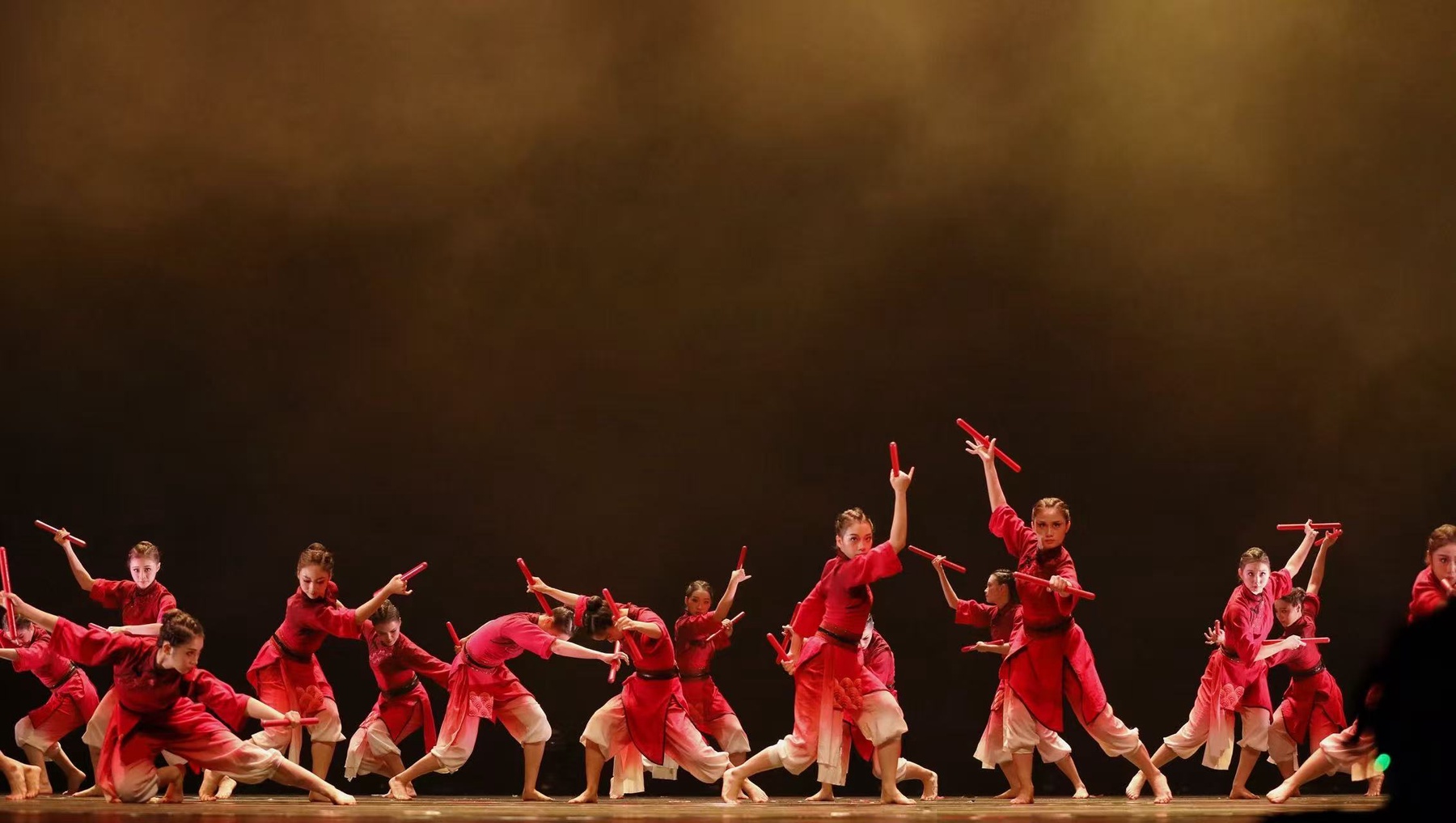
华南师范大学于2025年成为世界舞蹈联盟亚太地区会员单位,致力于融入亚太地区舞蹈艺术创新与发展,同时传播和推广中华优秀传统舞蹈。此次荣登国际会刊,既是对我校长期深耕岭南舞蹈的高度认可,也彰显了我校在中华优秀传统文化传承创新中的责任与担当。未来,学校将继续依托大湾区区位优势,深化岭南舞蹈的研究与传播,为讲好中国故事、推动中华文化走向世界贡献更大力量。
附报告原文:
Let Lingnan Dance Be Seen by the World
by Liu Yan, Huang Dongyun
Dance Department, School of Music, South China Normal University,
Guangzhou, China
In November 2025, Professor Wang Haiying, a distinguished professor and doctoral supervisor at the School of Music of South China Normal University, was invited to appear on CCTV’s Insights (Jian Jie) program. Centered on the theme “Let Lingnan Dance Be Seen by the World,” she was interviewed by renowned host Zhu Xun, sharing the university’s explorations and experiences in the preservation and dissemination of Lingnan dance.
Lingnan dance is an important component of China’s regional dance culture. It has been nurtured within a distinctive geographical environment and cultural context, characterized by openness and inclusiveness, and embodying the unique customs and spirit of the Lingnan region. In 2005, the concept of “Lingnan Dance” was first proposed by the renowned dancer Chen Qiao, and has since become a key focus of teaching, research, and artistic creation in universities across the region. Its forms are rich and diverse, with prop-based dances as a defining feature, including Lion Dance, Yingge Dance, Qiangu Dance, and the Long Drum Dance of Yao Minority, alongside a wide range of everyday and ritual dances.
As a leading figure in this field, Wang Haiying has long conducted fieldwork in Lingnan communities, advancing systematic research while continuously exploring its contemporary expression and discourse construction. Since 2006, South China Normal University has taken the lead in introducing Lingnan dance into higher education. Over nearly two decades, it has gradually developed a systematic body of achievements, including extensive academic publications, nearly one hundred original works, and a relatively comprehensive teaching system and talent cultivation framework. In 2019, the university was designated by the Ministry of Education as a “Lingnan Traditional Dance Inheritance Base for Excellent Traditional Chinese Culture,” making it one of the few dance institutions nationwide to receive this recognition.
In practice, the team has focused on advancing foundational initiatives, among which the establishment of the “Lingnan Dance Gene Bank” is particularly significant. Through the systematic collection and digital documentation of traditional forms such as Yingge Dance,Long Drum Dance of Yao Minority , and Lion Dance, previously scattered folk practices have been preserved and reconstructed. These have been transformed into teachable and shareable course resources, promoting the integration of traditional knowledge into modern academic frameworks. Related courses have also been recognized as national first-class undergraduate courses.
Building on this foundation, Wang Haiying’s team has further focused on constructing a discourse system for Lingnan dance. By examining its cultural logic and value, they have gradually clarified its cultural identity and evaluative framework, enabling broader audiences to understand and appreciate Lingnan dance, and to tell its stories more effectively. This work goes beyond the transmission of technique, emphasizing instead the systematic articulation of its cultural roots and its revitalization in contemporary contexts.
At the institutional level, the university provides comprehensive support. In terms of policy, cultural heritage preservation has been incorporated into academic evaluation and performance systems; in terms of resources, dedicated funding is ensured, alongside interdisciplinary team development and the upgrading of performance and resource platforms; and in terms of platforms, Lingnan dance has been integrated into general education for pre-service teachers, extended to primary and secondary education through the Greater Bay Area aesthetic education alliance, and promoted internationally through global exchange platforms.
From fieldwork to the construction of a gene bank, from classroom teaching to the gradual refinement of a discourse system, Wang Haiying and her team have, through nearly two decades of sustained dedication, guided Lingnan dance from being “seen” to being “remembered,” and further toward being inherited and shared. As she puts it, “Let the body move, and let the body remember”—for it embodies the deepest spiritual essence of this land.
字号:小中大
推荐
祝贺!华师师生双双入选国家队!
全球招聘,华南师范大学诚邀英才加盟!
全省“双第一”🥇🥇华师省哲社再创佳绩!
全国获奖名单揭晓,华师上榜!
重要!华师特别提醒!
祝贺!华师再传喜讯!
地方教师专项最高623分!华师录取日程公布!
这份指南,华师人请周知!
华师,放暑假啦!
注意!华师启动困难补助!
影像
微信

抖音

校报

微博
电子邮件
xiaobao@m.scnu.edu.cn
访问量
累积:314563526
今日:2429
版权所有
华南师范大学党委宣传部
华南师范大学新闻中心
Copyright © 2001-2024
news.scnu.edu.cn. All rights reserved.
技术支持:广州可媒